

Elisabetta Benassi
The Drowned World
Peter Freeman Inc., NY
11 January – 9 March 2024
Peter Freeman, Inc. is pleased to present Elisabetta Benassi’s first solo exhibition in the United States, The Drowned World.
Benassi uses a range of media, including installation, sculpture, photography, and video, to question modernity through the materials of its artistic, cultural, and political dimensions. The Drowned World features all new works conceived and created specifically for the occasion to present an archaeology of the future, an excavation from which the fossils of a vanished world emerge as metallic bones of animals exterminated by man.
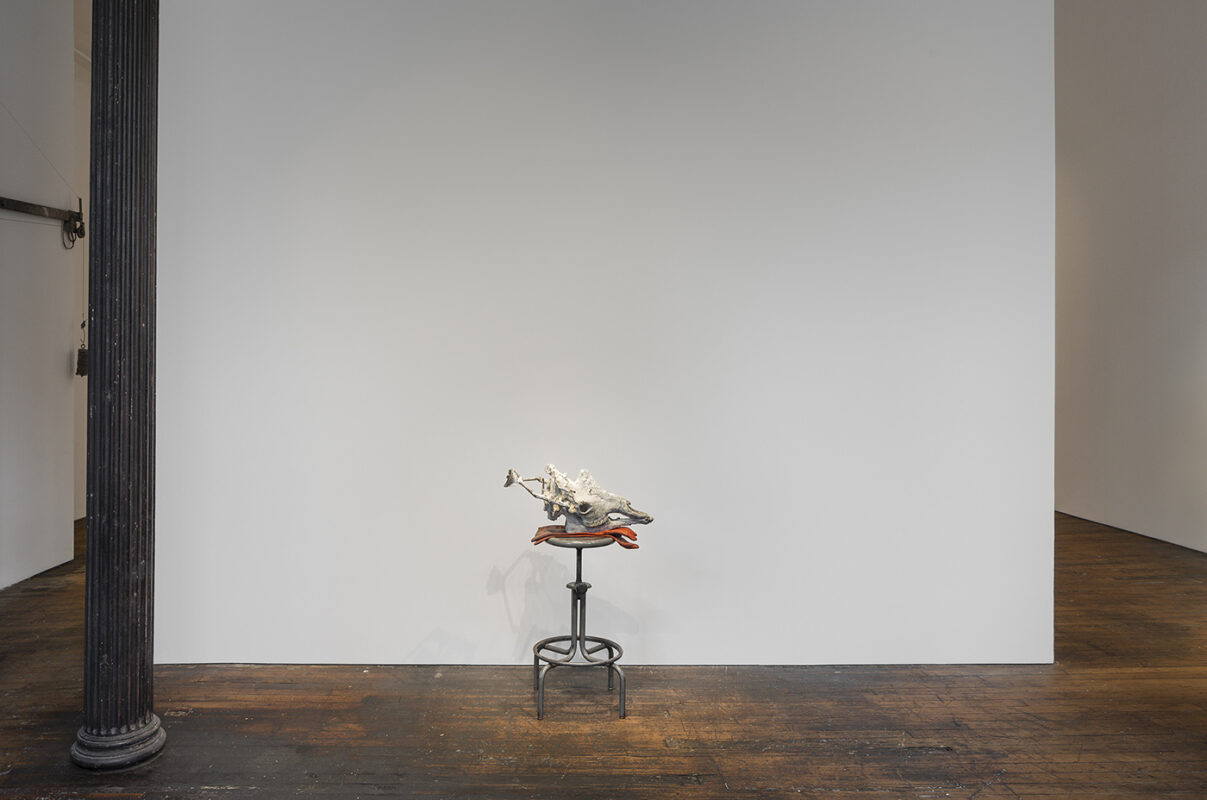
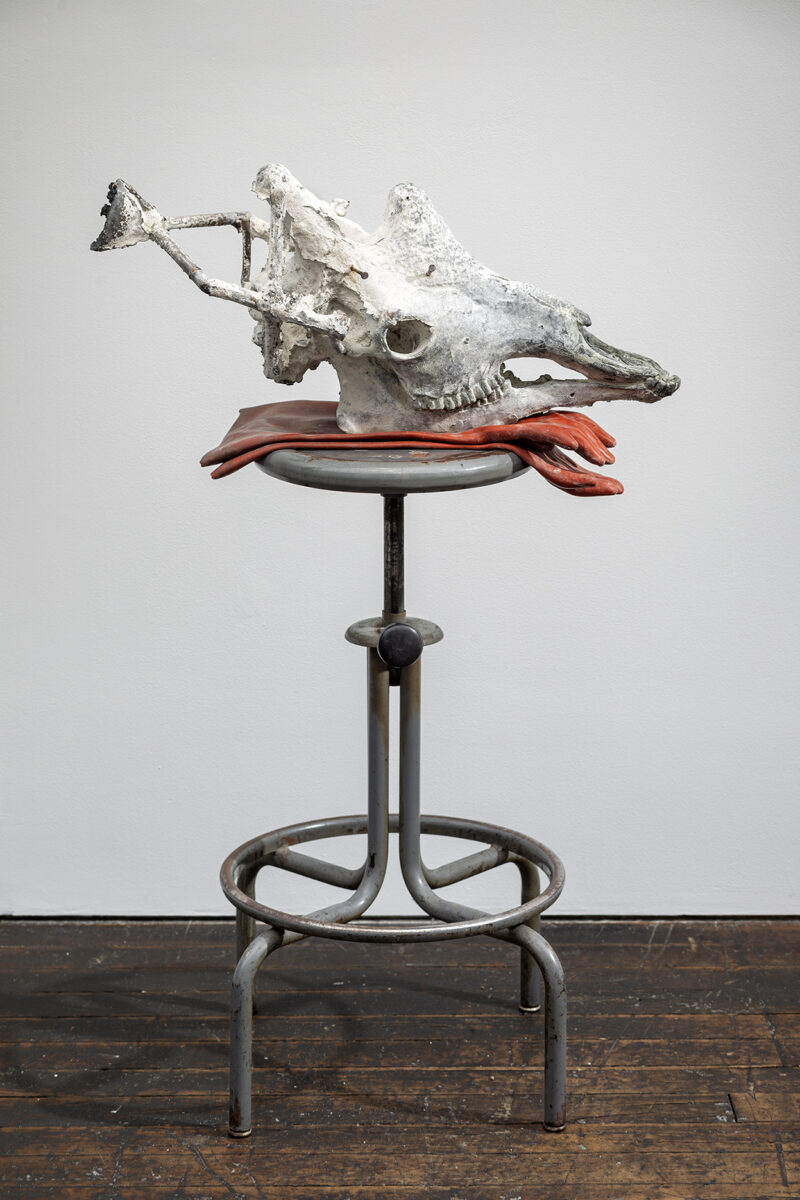
The exhibition functions as a landscape to be traversed within the gallery. At the entrance is Study for Michelangelo’s Head, a life-sized giraffe skull in bronze resting on a workshop stool and the first iteration of a forthcoming work recently selected for commission by the Museo Nazionale Romano to be installed in Michelangelo’s Cloister at the Baths of Diocletian.
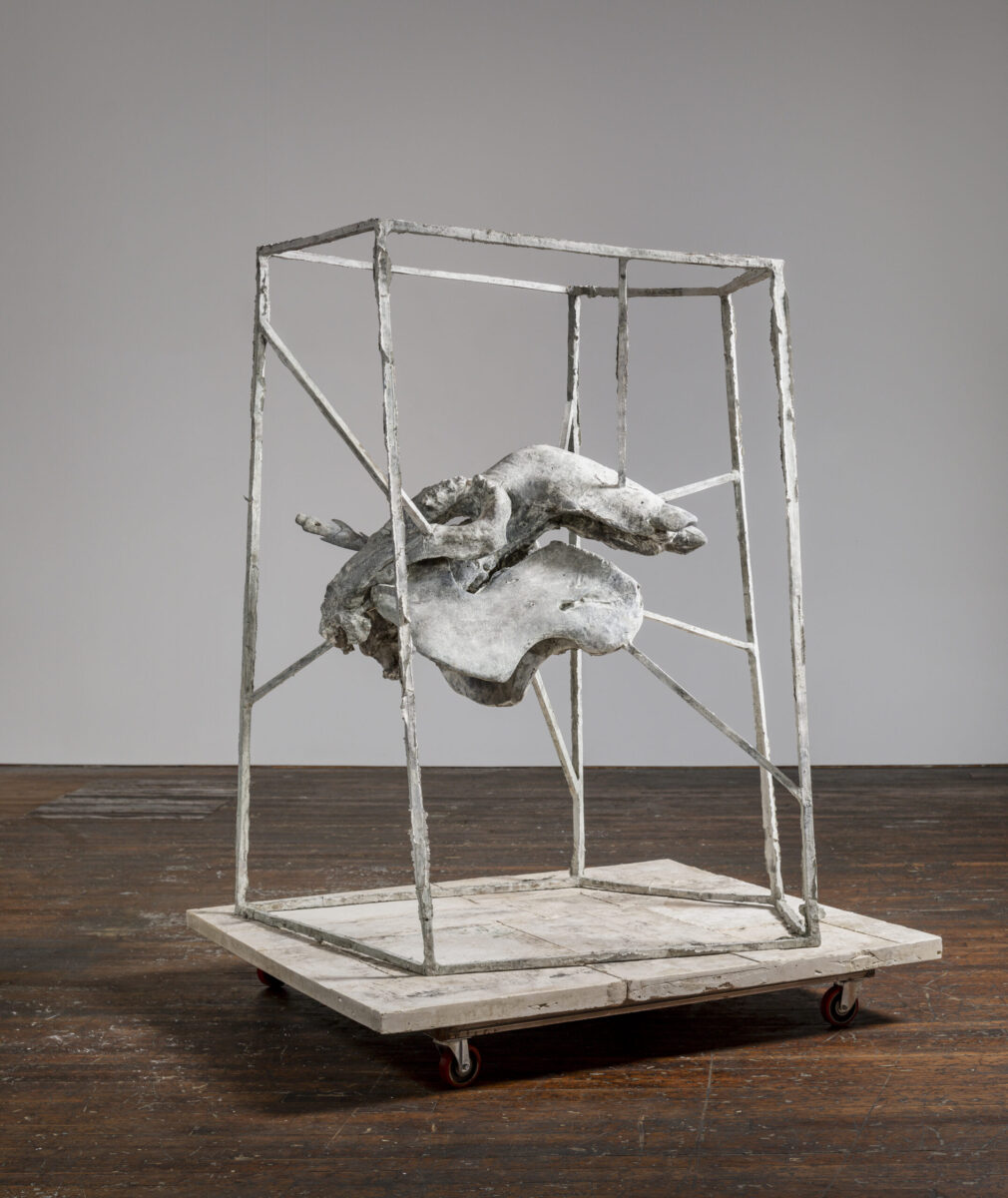
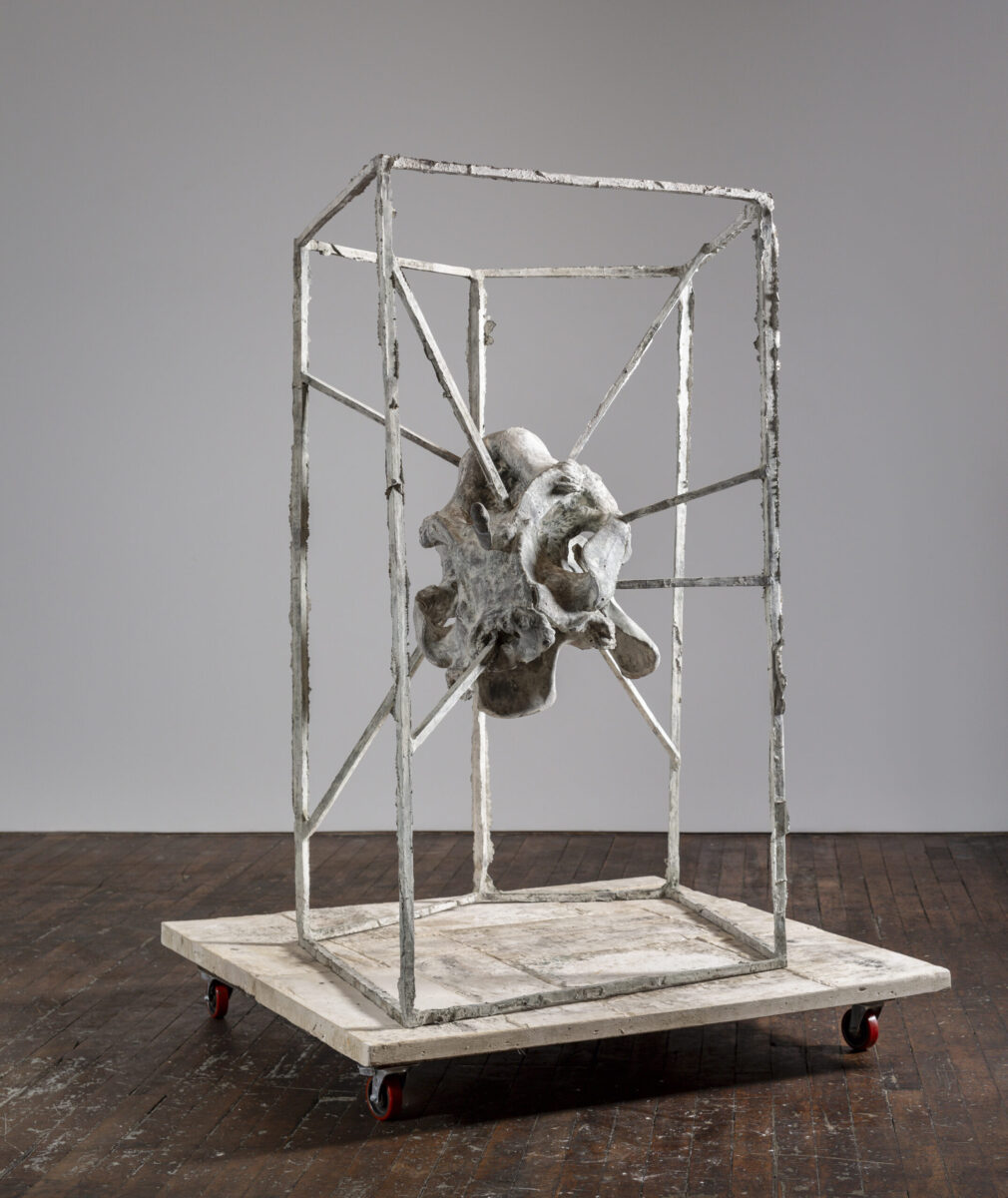
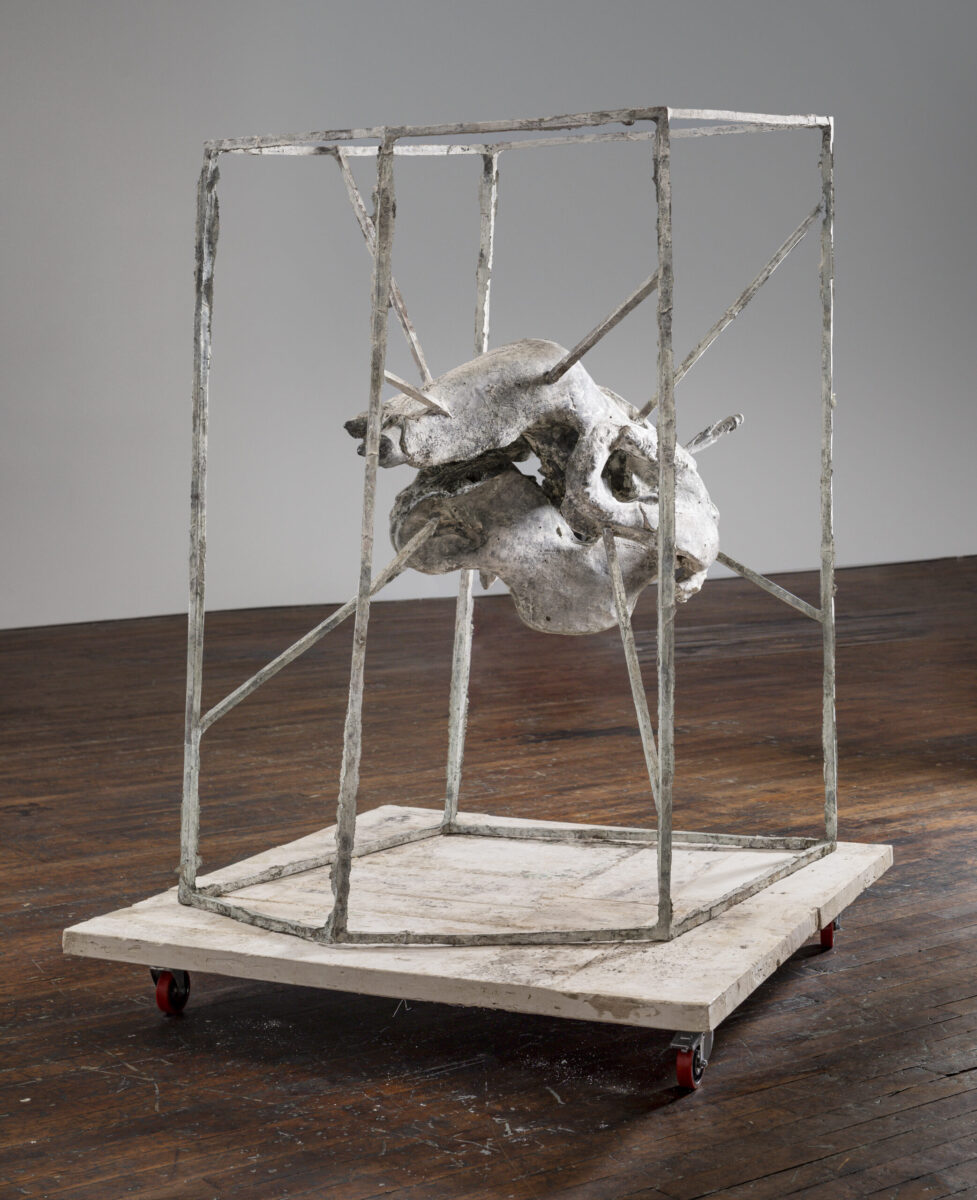
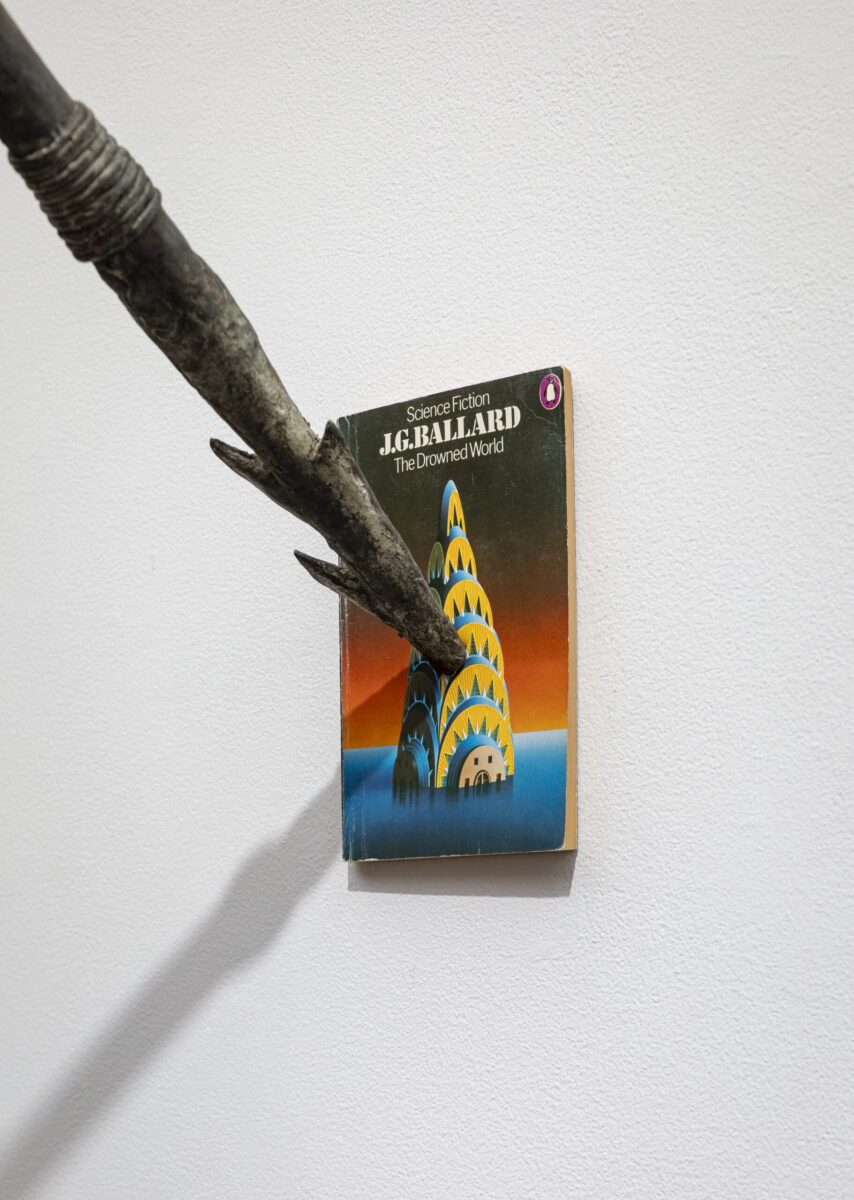
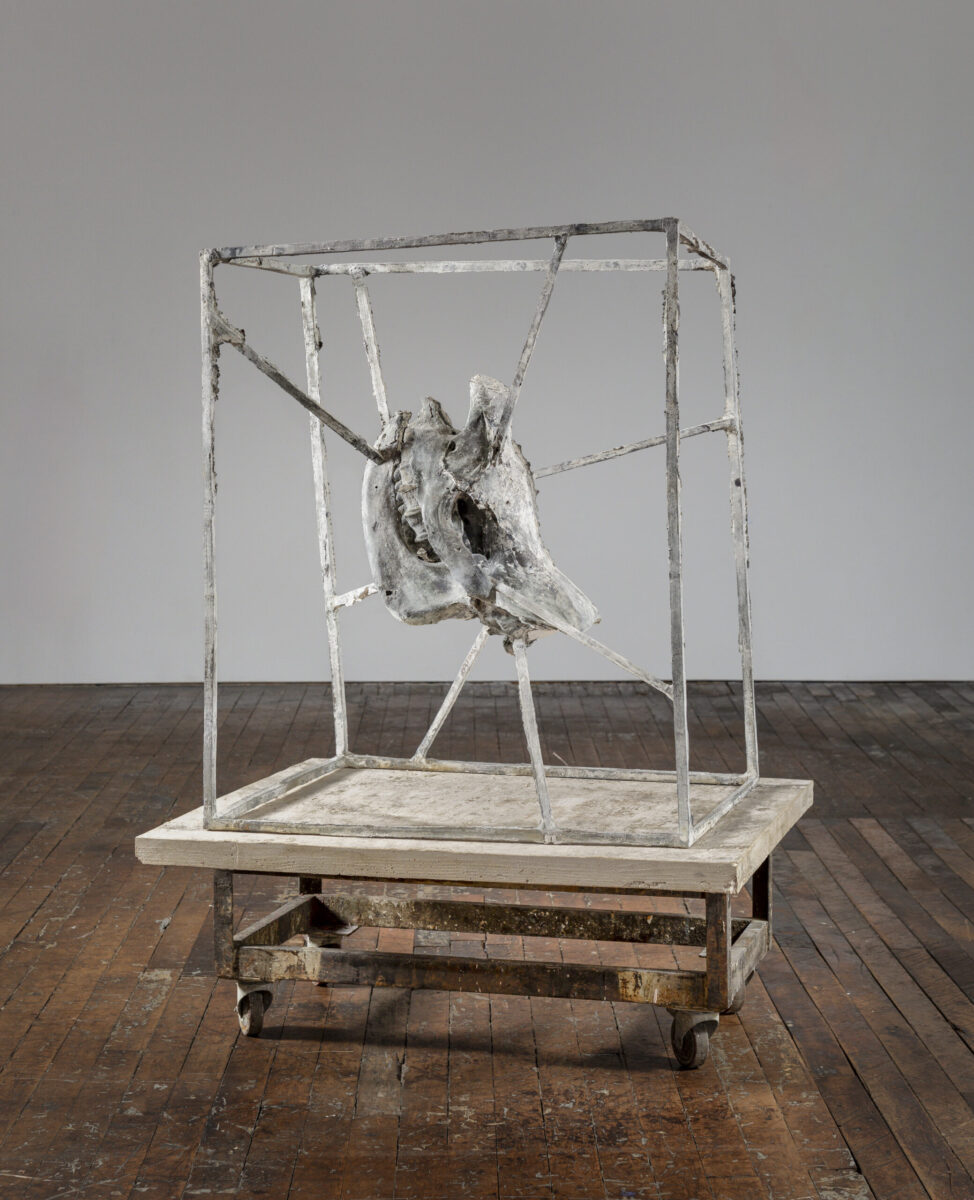
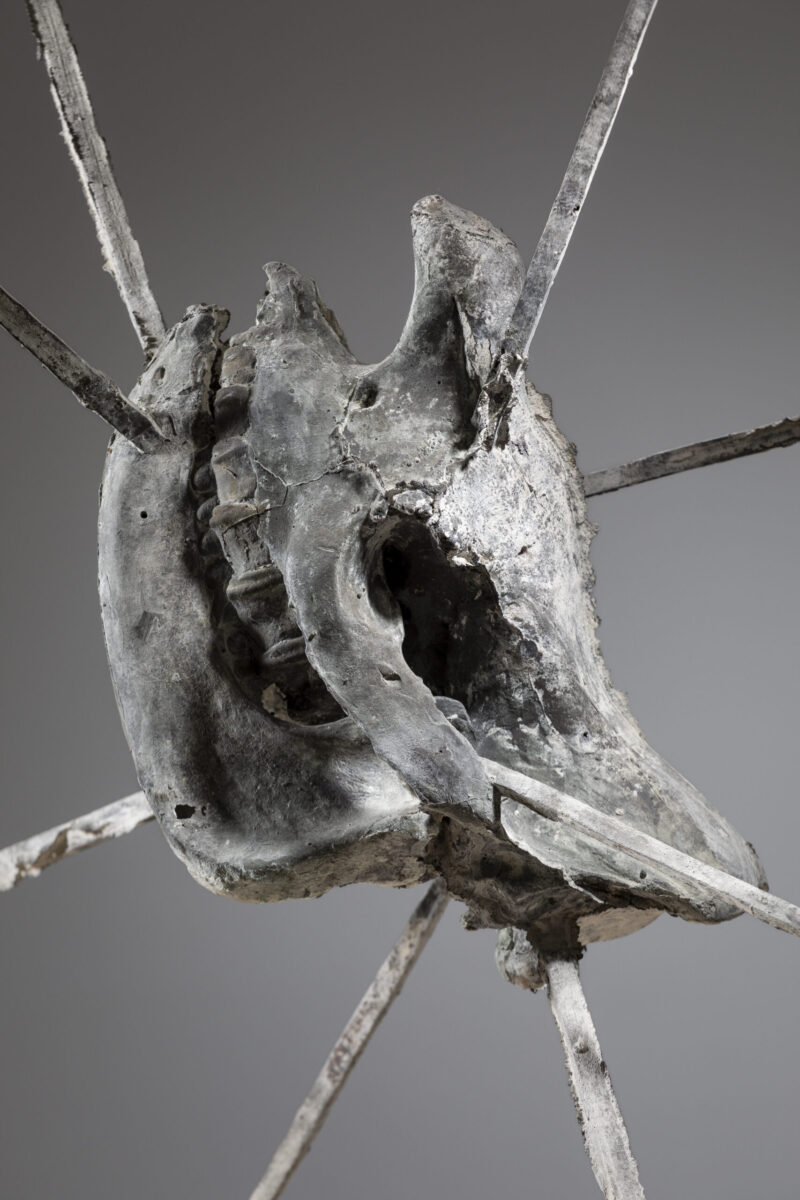
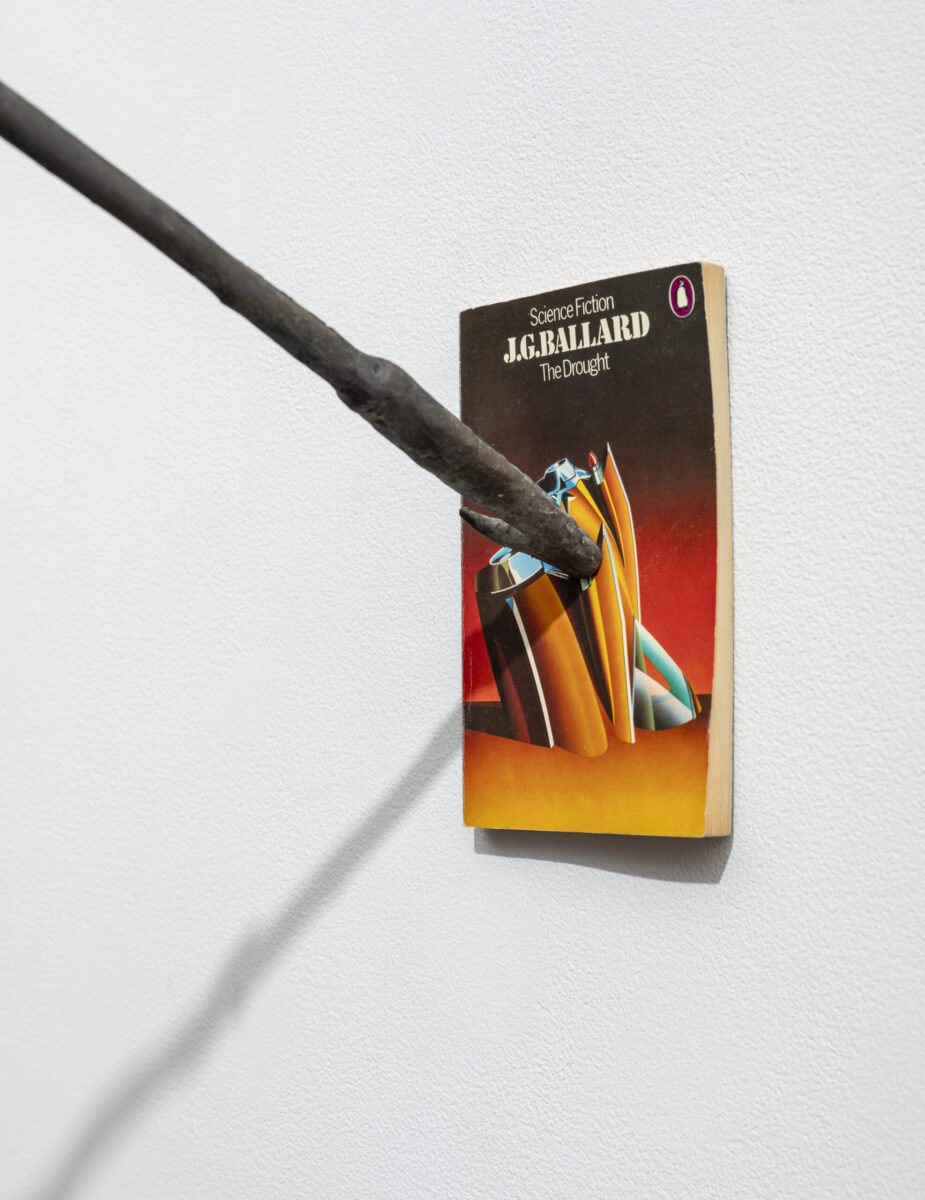
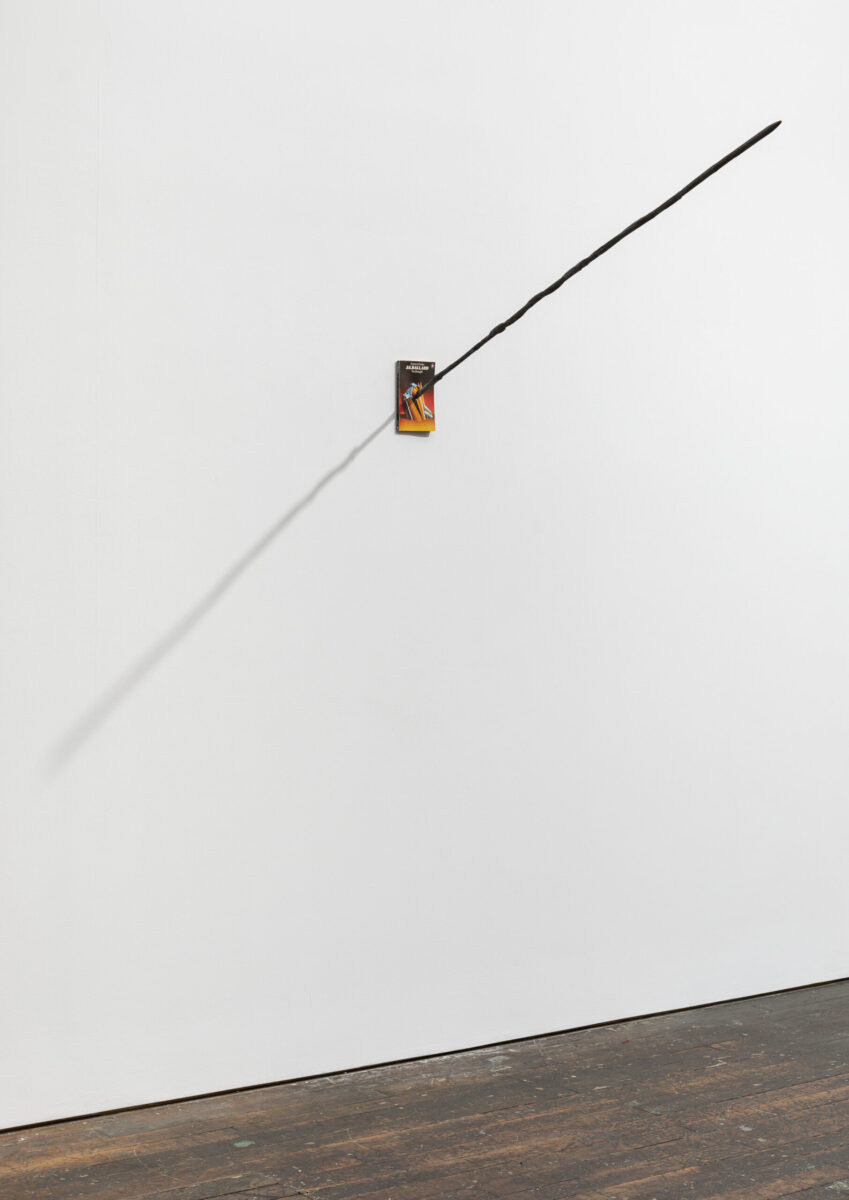
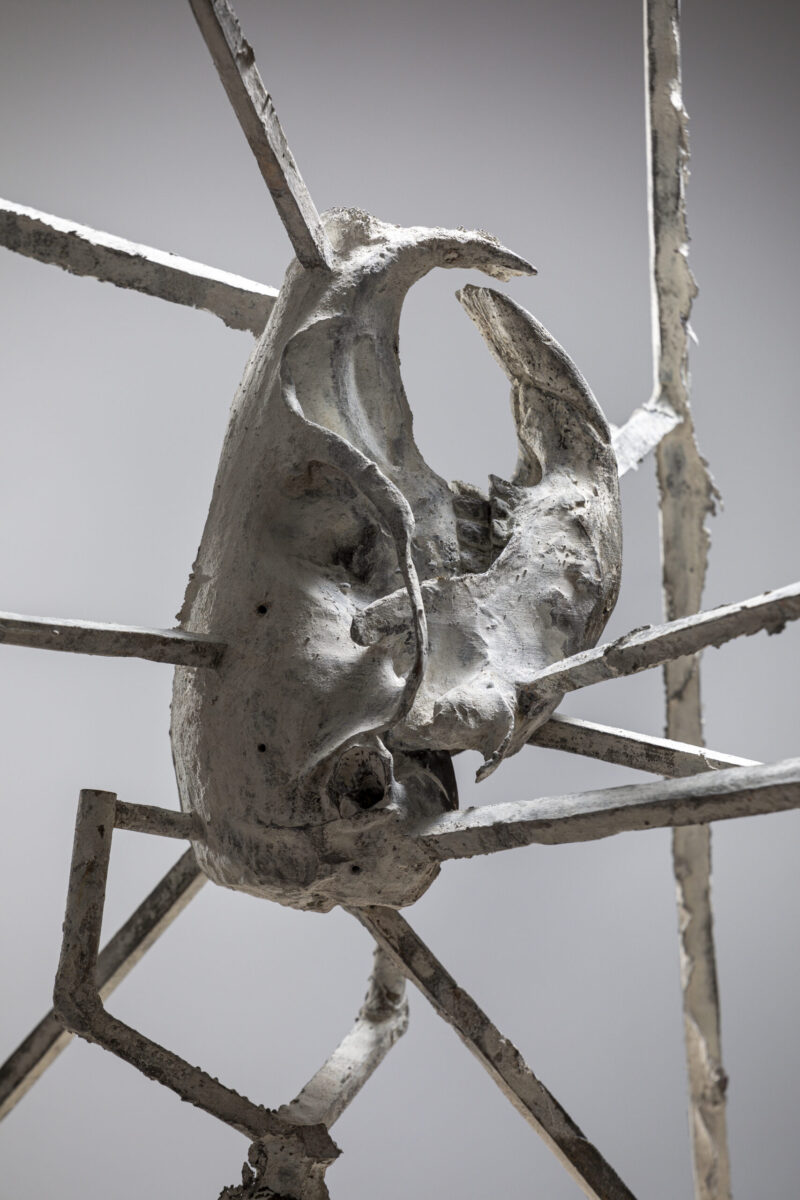
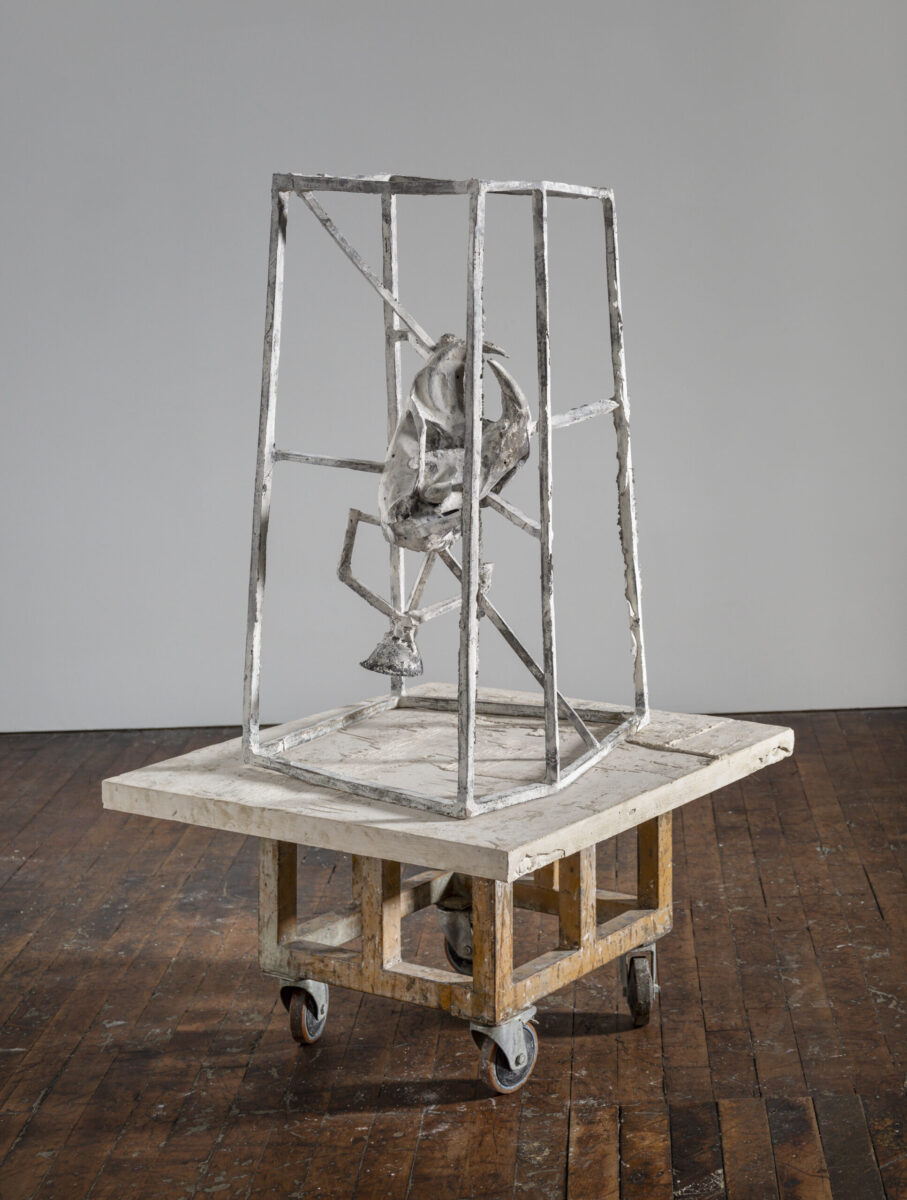
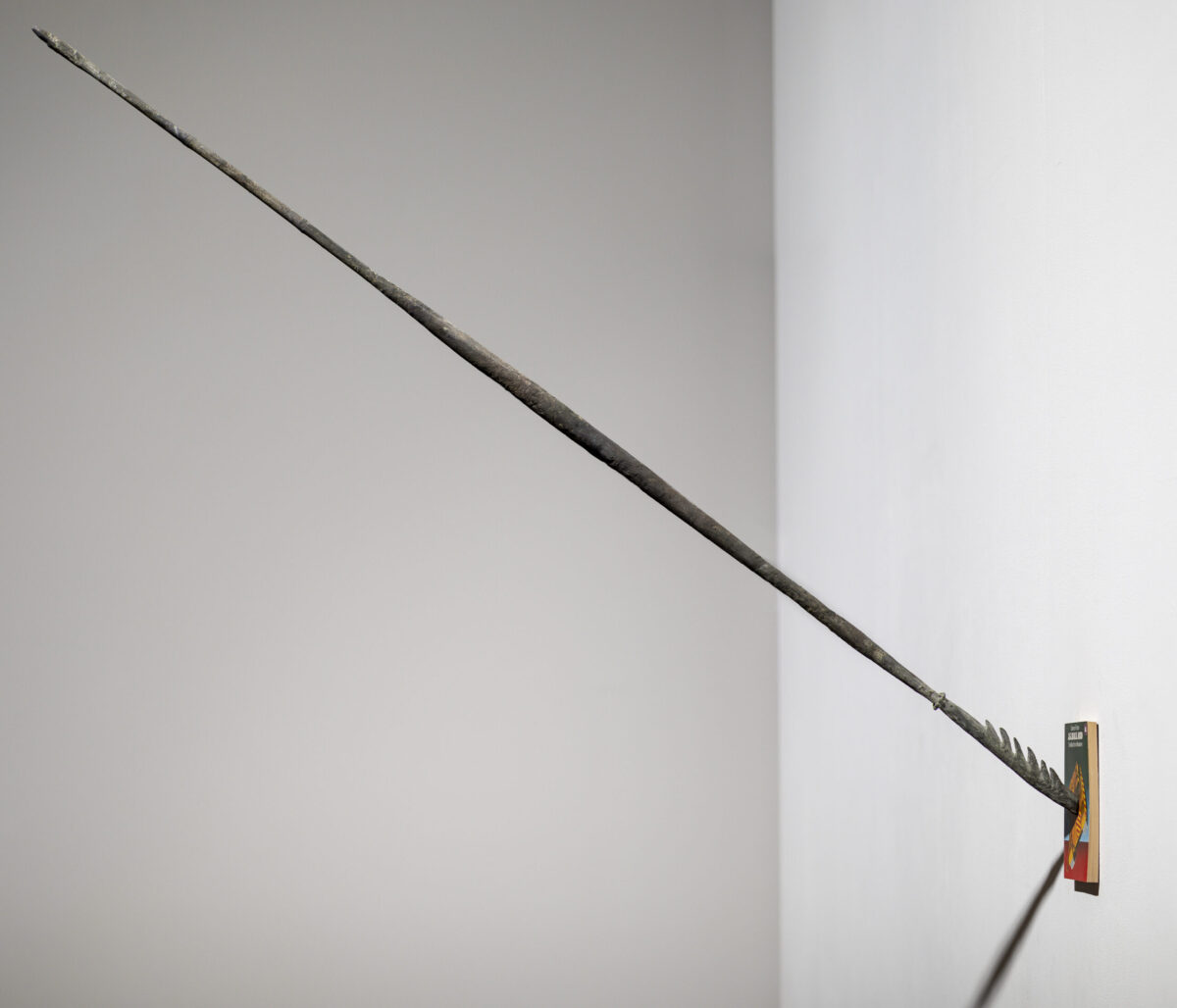
In the larger gallery space hangs a first edition copy of J.G. Ballard’s 1962 eco-fiction novel The Drowned World, the source of the exhibition’s title, pierced by a fishing spear modelled after the historic patterns of tribal harpoons. The harpooned text is accompanied by four enlarged animal skulls on metal foundry carts – Fixator I (Dugong), Fixator II (Puma), Fixator III (Rhinoceros), Fixator IV (Mole) – each bearing the marks of trauma and suspended within their own cage-like frames reminiscent of the external fixator devices used in the medical field to keep fractured bones stabilized. The various irregular, prismatic shapes connect the inner form to the outer structure, presenting self-referential imagery reflective of its own construction and materiality.
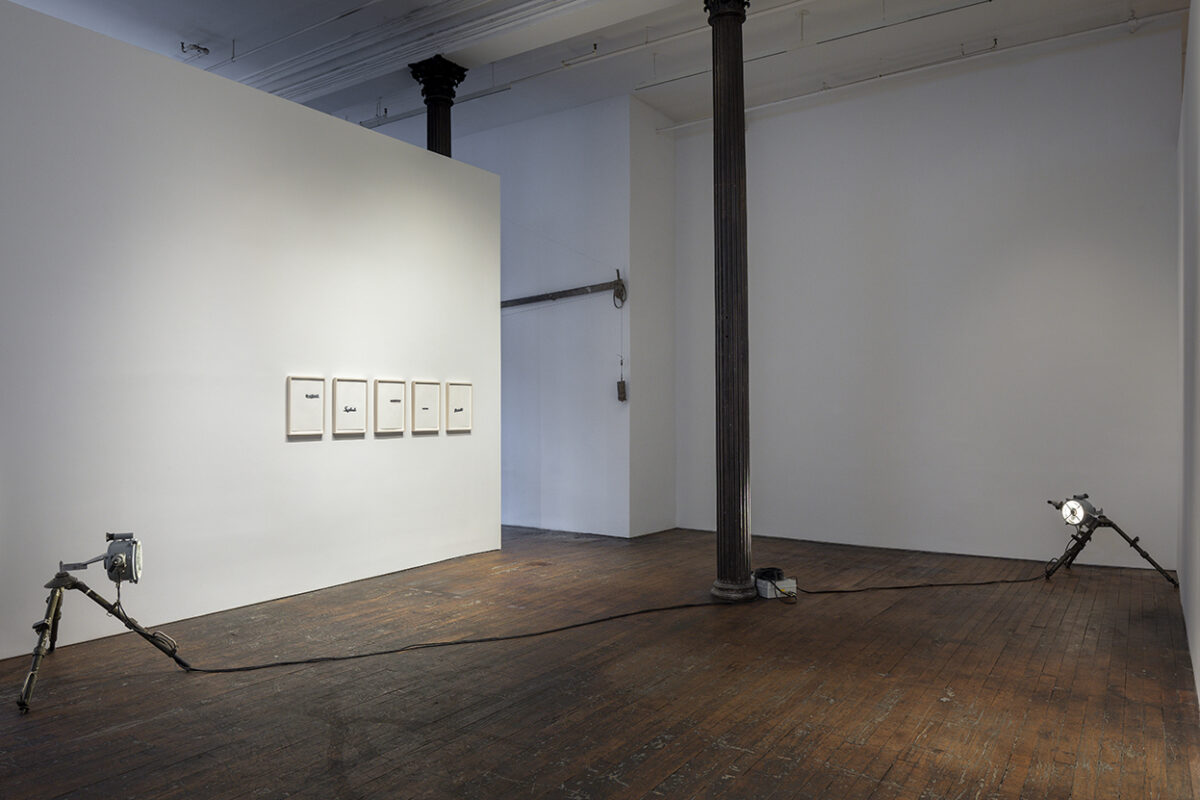
The center gallery is occupied by The Feast of Skulls, in which two Morse lamps mounted on military tripods use an electronic controller to translate the chapter titles from Ballard’s book into Morse code communicated through intermittent flashes of light projected through the space. Benassi engages material and metaphor to expose how the construction and destruction of ideologies can unfold through the artifacts and archives of our various local and global histories. With investigation and query, Benassi’s work finds forms with which to challenge both how and whose modernity ultimately perseveres.


